
Theme 1
Cyber-physical Inspection, Sensing, and Analysis
Theme Leads
Professor Ashutosh Tiwari and Dr Michael Farnsworth (University of Sheffield)
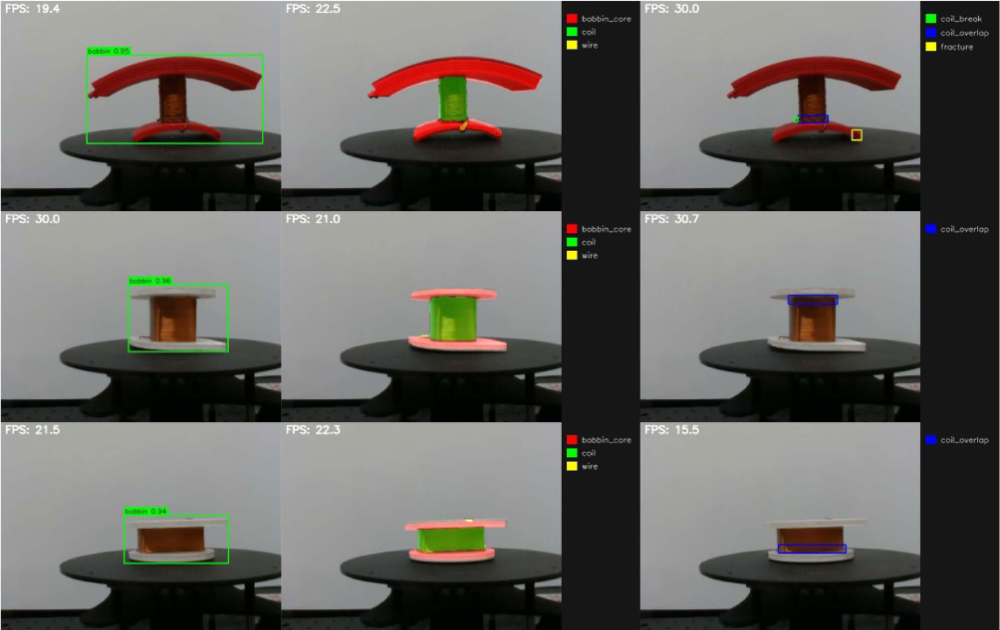
Theme 1 investigates how lifecycle data spanning design, manufacture, in-use operation, and end-of-life can guide Re-X decisions (repair, reuse, refurbish, remanufacture, recycle and recover) to facilitate circular manufacturing processes. Central to this effort is the use of Digital Product Passports – a digital record of a product’s sustainability, materials, origin, and repair/recyclability – to ensure that at end-of-life a product or component is reused, remanufactured or recycled appropriately. To this end, the research team has engaged with industry to review the current landscape, refine understanding of use cases, and prototype cyber-physical inspection rigs.
Scientific Scope of Work
This work pairs Digital Product Passports with cyber-physical inspection platforms that use non-destructive testing (for example visual, acoustic, magnetic, tactile) to allow characterisation of components while minimising disassembly. Using digital twins that simulate prospective end-of-life interventions (such as disassembly, surface treatment and component recovery) will enable assessment of Remaining Useful Life, estimation of performance and material loss, and financial and certification implications to preserve value. These outputs will feed decision-support systems estimation and Re-X pathway selection, combining AI, statistical learning, physics-informed modelling, and uncertainty quantification. In addition, large multimodal models (language–vision– structured data) will be utilised to enhance generalisation and transparency, moving from fragmented, ad hoc end-of-life choices toward integrated, evidence-based reasoning across the full product lifecycle.
Research Questions:
How should Digital Product Passports be structured to provide secure, decentralised lifecycle data access and downstream interpretability for inspection and modelling?
How can multimodal non-destructive testing be actively guided by uncertainty and prior knowledge to minimise destructive testing and preserve whole-product integrity?
How can lifecycle data, condition assessment, and virtual intervention models be fused to deliver robust, transparent remaining useful life estimates and end-of-life pathway selection?
Get in touch
Write us an email at [email protected]