Flagship 3
Electric Drives & Powertrains
Flagship lead
Professor Geraint Jewell (University of Sheffield)
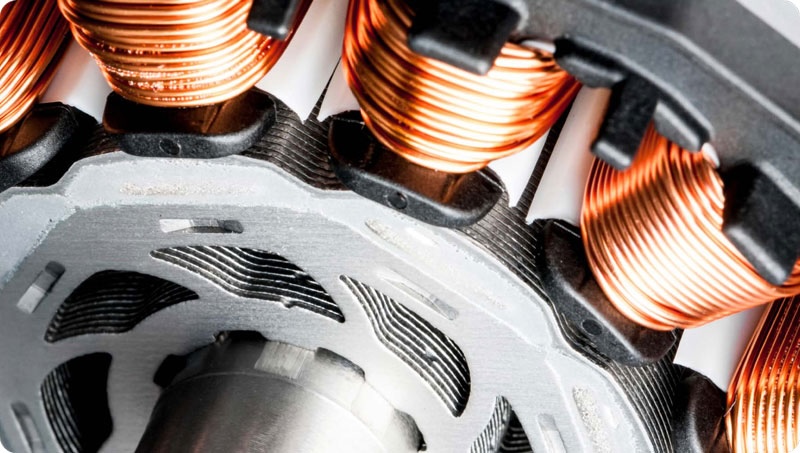
Electrical machines contain high-value functional materials such as copper, electrical steels, and rare-earth magnets, which are suitable for reuse and recycling, though often mixed with polymers and insulation. A rapidly growing volume of rare-earth permanent magnets in rotors of electrical machines which are reaching the end of their design life or being put into service in emerging mass-market products, notably hybrid and all-electric vehicles. The scope for remanufacture and repair of these machines has expanded significantly with automotive electrification, from established applications such as electrical power-assisted steering, now nearly ubiquitous, to the recent growth of hybrid and electric vehicles. However, the automated and cost-effective disassembly of permanent magnet machines poses many technical challenges, foremost amongst which are:
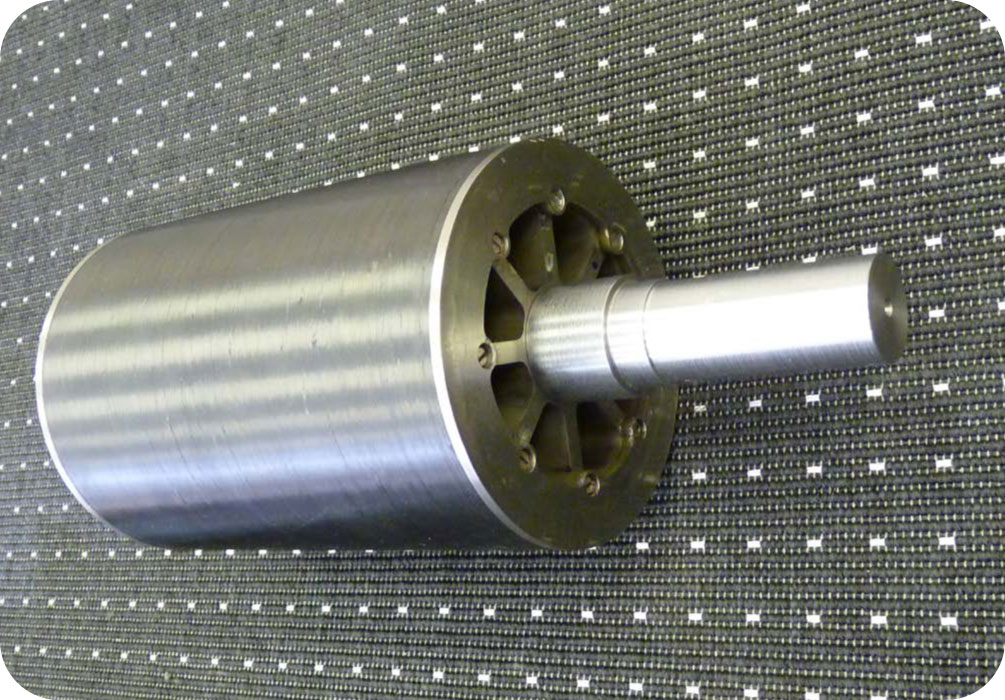
Challenge 1 - Disassembly of magnetised components (e.g. rotors with strong magnetic fields)
Disassembly is essential for repair, remanufacture, or recycling of electrical machines, requiring controlled separation of sub-assemblies without damage or degradation. In many machines that fail in service, the most common issues are bearing and stator winding failures, which do not usually affect the permanent magnet rotor beyond bearing removal. Consequently, intact rotor extraction for reuse or remanufacture is often the preferred approach. Many disassembly tasks mirror established practices in other rotating automotive and industrial components, such as turbochargers, compressors, and geared pumps, involving the removal of bolts, covers, structural end plates, and bearings. However, in permanent magnet machines, strong magnetic forces exist between the magnets and ferromagnetic elements such as the stator core. When extracting a rotor for repair or remanufacture, the extraction method must be stiff enough to resist these forces and avoid damage to the rotor or stator. This is particularly challenging in high-variety operations where geometry-specific jigs are impractical. While robots offer adaptability and dexterity, the forces in many medium and large machines may exceed their payload capacity. In such cases, novel, reconfigurable end-effectors are needed to brace or guide the robot during rotor extraction.

Challenge 2 - Varnishes and epoxies complicate automation
Electrical machines use varnishes and resins for insulation, mechanical support, and heat transfer, typically applied via wet processes with vacuum pressure impregnation and oven curing. While producing robust windings, these materials make removing damaged or end of life windings challenging, as cores can be damaged or residues left behind. Research in this area focuses on developing mechanical, chemical, and hybrid automated methods to extract stator windings efficiently and safely.
Challenge 3 - Composites hazardous to manual dismantling
Many high-performance electrical machine rotors use filament-wound carbon fibre composite sleeves with high pre-tension (>500 MPa) to keep magnets secured at rated speeds. During disassembly, this pre-tension must be carefully managed, especially when cutting the sleeve to access magnets. Ensuring that any automated process for magnet recovery can accommodate the sudden release of the tension in a rotor sleeve during cutting is a challenge in terms of both process design and variability of rotor sleeve response.
Get in touch
Write us an email at [email protected] or fill in the form below.